
Featured Post
The Investor's Enemy: Impatience
Impatience can cost investors more than fees or bad stock picks. I use 150+ years of market data to measure the real price of stepping out too soon.
Impatience can cost investors more than fees or bad stock picks. I use 150+ years of market data to measure the real price of stepping out too soon.
Why I built an investing process before picking stocks: screen the universe, write the thesis, size deliberately, and let price alone decide nothing.
NVIDIA doubled revenue in a year. I dig into Q2 FY27, Data Center dominance, margins, AI infrastructure, risks and what its $5T valuation requires.

My investing philosophy: seven beliefs, eight rules, and the lessons behind them. A framework for controlling what I can and surviving what I can’t.

Saving, investing, speculating and trading aren’t the same game. Learn what separates them, where returns come from, and why knowing the difference matters.
Is the stock market gambling? I did the math: one spin on red vs 155 years of market data. Same small edge, opposite destinies, how to sit on the house's side.
Share price tells you almost nothing about a company. Learn the difference between share price, market cap, and enterprise value to invest smarter.
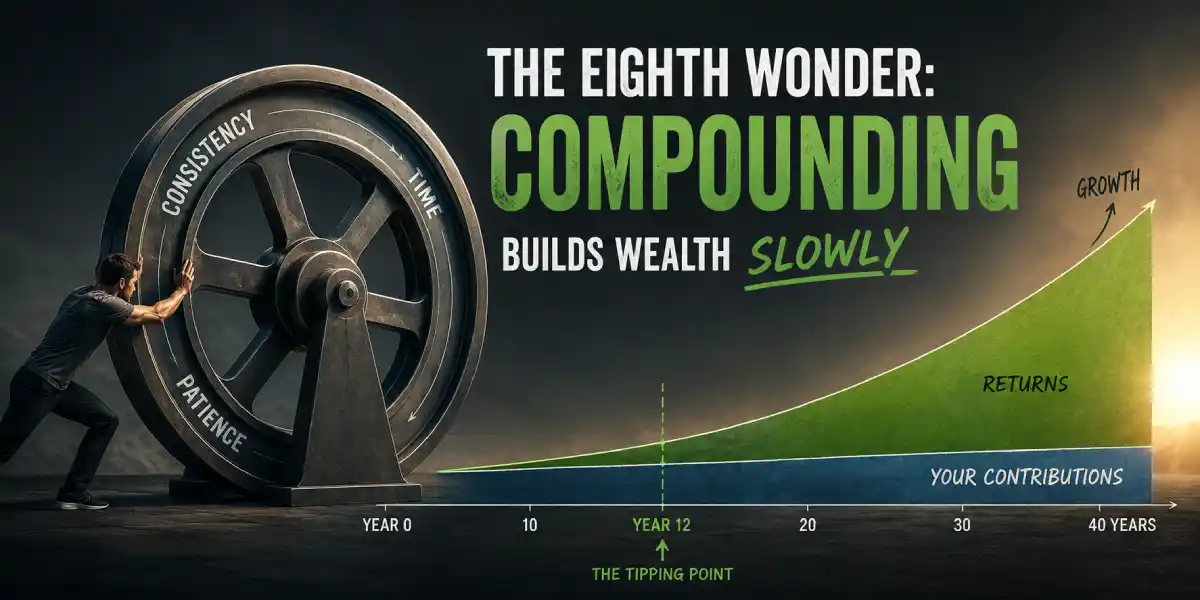
Compounding is the idea everyone nods at and nobody feels. I built the model, ran EUR 300/month through 40 years of math and 38 years of real market history, and found the year it stops being boring.
Stocks aren’t lottery tickets, they’re ownership in real businesses. Learn how they create value, why prices move, and how to invest with confidence
Part 2: Turn SEC filings into data with Python. A small toolkit downloads each company once, then extracts revenue, margins, operating income, cash flow and debt—annual and quarterly—so you compare businesses on the numbers, not the hype.
Part 1: A beginner's guide to SEC EDGAR, what it is, the filings that matter (10-K, 10-Q, 8-K), and how to compare companies and ask better questions instead of guessing from stock prices.
I almost bought NVIDIA because I work in infrastructure. Then I tried to actually defend it as a buy at today's price — and couldn't. Liking an industry isn't a thesis. New rule: start every name on a study list, never a buy list, until I can explain the valuation in plain language.