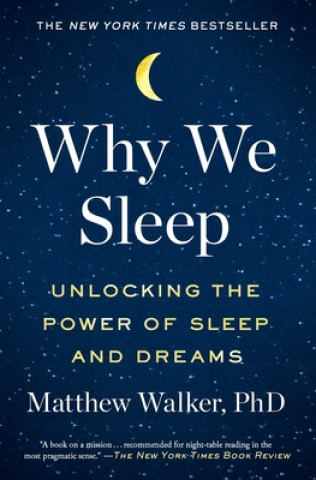
Sleep. Tadaaa! 😁
Yes, that thing we all do, that some of us love, and that far too many of us sacrifice for one more email, one more episode, or one more hour of work. We spend roughly a third of our lives doing it, yet we often treat it as time that could have been put to better use.
That is exactly the assumption Matthew Walker challenges in Why We Sleep.
Walker, a neuroscientist and sleep researcher at the University of California, Berkeley, takes us into a world most of us know surprisingly little about: what happens inside our brains and bodies after we close our eyes. Memory, creativity, emotional balance, immune function, metabolism — sleep touches all of them.
And, as always, let’s start with the numbers. When I checked Goodreads in November 2026, the book was rated around 4.36/5, with roughly 240,000 ratings and more than 23,000 reviews. That’s quite an audience for a book telling us to put our books down and go to bed.
Popularity isn’t proof that every scientific claim is correct, of course. But it tells you this subject has struck a nerve.
Sleep Is Not Time Wasted
We live in a world obsessed with productivity. We track our steps, count calories, measure performance, optimize schedules, and try to squeeze more into every waking hour. Sleep often ends up being the first thing we cut.
Walker’s central argument is that this gets the equation backwards: sleep isn’t what remains after we’ve finished living; it’s one of the things that makes the rest of life work.
While we sleep, our brains are anything but switched off. They cycle through distinct stages associated with learning, memory processing, and emotional regulation. Our bodies also undergo important hormonal, metabolic, and restorative processes.
One of the book’s greatest strengths is making that invisible work feel real. The eight hours we spend in bed are not eight empty hours. A surprising amount is happening behind the scenes.
I came away with a different way of thinking about rest: perhaps the better question is not “How much can I accomplish if I sleep less?” but “How much better could I function if I slept well?”
The Two Sides of Sleep: REM and Non-REM
Walker explains that sleep isn’t one continuous state. It consists of two broad types, each with different characteristics:
- Non-rapid eye movement (NREM) sleep includes lighter sleep and deep, slow-wave sleep. These stages are involved in physical restoration and aspects of learning and memory.
- Rapid eye movement (REM) sleep is associated with vivid dreaming, highly active brain patterns, and important roles in memory and emotional processing.
We move between these states several times a night. Deep NREM sleep tends to feature more prominently earlier in the night, while REM periods generally grow longer toward morning. Both matter; neither is a magic switch that can replace the other.
That’s a useful point because our fascination with “deep sleep scores” can make it seem as though a single number tells the whole story. Real sleep is more complicated than an app’s nightly verdict.
For a visual explanation, see this hypnogram showing the architecture of a night’s sleep. The US National Institutes of Health’s guide to sleep stages is also an accessible reference.
Society’s Quiet War on Sleep
One of the most uncomfortable parts of Why We Sleep is how ordinary the causes of poor sleep look.
Artificial light, late-night screens, work schedules, early alarms, caffeine, social obligations — none of these seems especially dramatic in isolation. Together, though, they can push our routines away from the biological rhythms that regulate sleep and wakefulness.
Consider the familiar routine: finish work late, scroll through your phone, watch something to relax, go to bed later than planned, and still wake up at the same time because life doesn’t care that you need another hour.
Repeat that often enough and the problem isn’t merely feeling tired on Monday.
Walker also looks beyond individual habits. His discussion of teenagers is particularly compelling. Adolescents tend to experience a natural shift toward later sleep and wake times, while school schedules often demand an early start. This isn’t simply teenagers being lazy; it’s partly biology meeting a timetable that doesn’t fit it. The American Academy of Sleep Medicine has recommended later middle- and high-school start times for this reason.
That is where the book becomes more than a personal wellness guide. It asks whether our schools, workplaces, and expectations are organized around what human bodies actually need.
What Happens When We Don’t Sleep Enough?
Walker is at his most persuasive when describing what insufficient sleep can do to our everyday functioning.
Attention slips. Reaction times slow. Learning and recall become harder. Emotional reactions can feel bigger, while patience and judgment become smaller. Those are not abstract problems — they matter when we’re driving, working, studying, making decisions, or simply trying to be decent company.
Longer-term health is more complicated. Research has found associations between chronically insufficient or poor-quality sleep and conditions including cardiovascular disease, type 2 diabetes, and mood disorders. Those links deserve attention, but an association does not automatically mean that lack of sleep is the sole cause. Health is rarely that simple.
The book also explores sleep and Alzheimer’s disease, including research into proteins such as beta-amyloid. It is a fascinating area, but the evidence should not be read as proof that one bad night damages the brain irreversibly, or that better sleep by itself will prevent dementia.
The practical message is serious enough without turning every late night into a medical horror story.
And if you enjoy a glass of wine in the evening — or occasionally indulge in cannabis — Walker’s discussion of how substances can affect sleep may be an uncomfortable one. 😜 Falling asleep more easily is not always the same thing as getting better-quality sleep. His conversation with Andrew Huberman digs into alcohol, cannabis, caffeine, and much more.
So, What Can We Actually Do?
A book that only makes you worry about your sleep would be a rather cruel bedtime companion. Fortunately, Walker also offers practical ideas, many of which align with mainstream sleep-health guidance.
Here are the ones worth taking seriously:
- Protect a reasonably consistent schedule. Try to go to bed and wake up at similar times, including on weekends. Regularity can help your internal clock.
- Give yourself enough opportunity to sleep. Most adults need at least seven hours, although individual needs vary. Sleep quality matters alongside duration.
- Make the bedroom work for you. A dark, quiet, comfortably cool room is a much better invitation to sleep than bright lights and constant interruptions.
- Pay attention to caffeine and alcohol. Afternoon or evening caffeine can interfere with falling asleep, and alcohol can disrupt sleep quality even if it initially makes you drowsy.
- Create a real wind-down routine. Dim the lights, put the phone aside, read something relaxing, or find another quiet habit that helps you transition from a busy day.
- Get daylight and move during the day. Natural light and regular physical activity can support a healthier sleep-wake rhythm.
These are practical habits, not commandments. One bad night does not erase the benefits of all the good ones. And although sleeping longer after a short night may help you feel and perform better, it isn’t always a complete substitute for consistently getting enough sleep.
The CDC’s overview of healthy sleep is a useful, evidence-based starting point if you want to put these ideas into practice.
The Part Where I Apply a Discount Factor
Now for a necessary caveat: Why We Sleep is an engaging and important book, but it is not beyond criticism.
Walker sometimes presents complex or uncertain research in language that sounds more conclusive than the evidence warrants. Some sweeping claims about sleep duration, disease risk, and longevity have been challenged. In 2019, independent researcher Alexey Guzey published a detailed critique questioning the accuracy and interpretation of several claims in the book.
Even Bill Gates, who praised the book in his own review, expressed reservations about some of its stronger claims, particularly the suggested link between insufficient sleep and Alzheimer’s disease.
That distinction matters to me. You can accept the big picture — that sleep plays a fundamental role in health and daily functioning — without accepting every dramatic statistic at face value.
As I like to think about it, apply a discount factor to the boldest claims. The core argument still has considerable value.
There is another reason for balance: turning sleep into a performance target can backfire. Someone already struggling with insomnia doesn’t need to be frightened into lying awake worrying about the damage they’re supposedly causing. If poor sleep is persistent or seriously affects daily life, professional guidance may be more helpful than another sleep tracker or a stricter bedtime rule.
Respect sleep. Don’t become afraid of it.
What Stayed With Me
I think the real value of Why We Sleep isn’t that it reveals some magical secret. Most of us already know that a good night’s sleep feels better than a terrible one.
What Walker does well is explain why that familiar feeling matters, and connect it to things we often separate from sleep: learning, decision-making, creativity, emotional stability, and long-term health.
We are remarkably willing to compromise sleep in the name of being productive. Yet the very abilities we’re trying to use — concentration, sound judgment, patience, imagination are often the first to suffer when we’re exhausted.
That’s the contradiction I kept coming back to while reading.
The book is sometimes alarming, occasionally too certain, but consistently thought-provoking. And it succeeds at something valuable: making a mundane biological necessity feel worthy of our attention and respect.
Final Thoughts
Would I recommend Why We Sleep? Yes, with a little healthy skepticism.
Read it for the fascinating introduction to sleep science, the explanation of REM and NREM sleep, the challenge to our always-on culture, and the practical habits worth reconsidering. Just remember that an excellent wake-up call is not automatically a perfect scientific reference.
If you’ve ever treated sleep as wasted time, this book might change your mind.
And if it convinces you to close this page a little earlier tonight, I suspect Matthew Walker would be delighted. 😁
Happy PiPing!
Watch, Listen, and Read More
-
Practical Tips for Good Sleep — Neuroscience Professor Matt Walker, a short video for the practical side of things.
-
Dr. Matt Walker: The Science & Practice of Perfecting Your Sleep, a roughly three-hour conversation with Andrew Huberman. If you want the long version, this is it.
-
Bill Gates on Why We Sleep, an appreciative review that also notes where the book may overstate the evidence.
-
NIH: Sleep Phases and Stages, a clear overview of REM and NREM sleep.
-
CDC: About Sleep, recommendations for sleep duration and healthy habits.
-
Alexey Guzey’s Critique of Why We Sleep, a detailed critical perspective worth reading alongside the book.
Comments
0