Minor spoilers: this review discusses the central friendship, but not the ending.
The Big Idea
What happens when the fate of the world depends on someone who cannot even remember his own name?
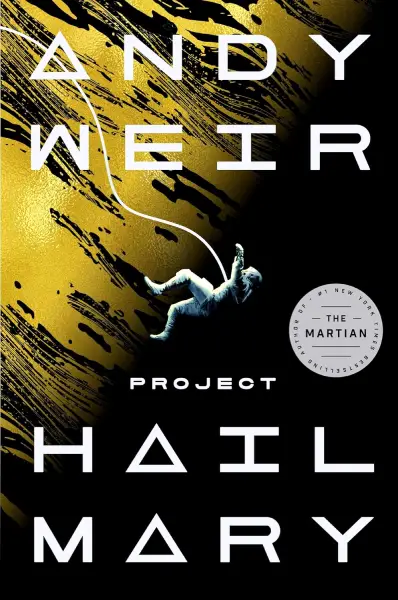
That is the irresistible starting point of Project Hail Mary. Ryland Grace wakes up aboard a spacecraft, far from Earth, surrounded by machines he does not understand and two crewmates who are already dead. As his memories return, so does the terrifying scale of his mission: humanity is facing an existential threat, and he may be its last chance.
But the book’s real idea is bigger than survival through intelligence. It is about curiosity, cooperation, and the stubborn decision to keep trying. Progress rarely arrives as one glorious breakthrough. It arrives through questions, mistakes, experiments, and the willingness to admit that your first explanation was wrong.
That is what resonated with me. Whether I am thinking about software, markets, or a difficult technical project, the starting point is often the same: incomplete information, pressure, and a problem too large to solve in one step. Grace’s response is not magic, actually it is to make the unknown a little smaller.
Why I Picked This Book
I wanted science fiction that was imaginative without abandoning logic: a real adventure, a compelling mystery, and enough science to make the danger feel tangible. Andy Weir has a reputation for turning engineering into suspense, and Project Hail Mary seemed to promise exactly that.
I was also curious about the extraordinary enthusiasm surrounding the book. Popularity does not guarantee quality. Sometimes it just means a book knows how to please a crowd. In this case, I think Weir delivers both accessibility and substance, although not without trade-offs.
What surprised me most was not the scale of the mission. It was how much emotional weight the story managed to carry alongside the calculations, experiments, and improvised engineering.
Top 3 Takeaways
1. Solve the next problem, not the entire disaster
Grace’s situation is almost comically hopeless. He is isolated, missing essential memories, and responsible for a mission whose stakes are difficult to comprehend. Yet he rarely makes progress by dwelling on the full catastrophe. He asks narrower questions: What do I know? What can I measure? What could explain this observation? What is the next experiment?
I loved this aspect of the book because it captures something true about hard problems. The mind wants a complete answer immediately. Reality usually gives us only enough evidence for the next step.
The lesson I am taking from it is simple: turn uncertainty into a sequence of testable questions. In software, that means isolating a failure instead of rewriting everything. In investing or trading research, it means testing a thesis rather than defending a feeling. The next small, verifiable step matters more than the illusion of certainty.
2. Cooperation is a survival advantage
Then there is Rocky.
For me, Rocky is what elevates Project Hail Mary from a clever survival puzzle into a memorable story. His relationship with Grace is funny, inventive, and unexpectedly moving. It works not because the two are similar, but precisely because they are so different. They have different bodies, senses, assumptions, and ways of solving problems. Even communication must be invented rather than taken for granted.
Their friendship makes the book’s most persuasive argument without delivering a speech: a different perspective can be more valuable than another version of your own.
Grace is intelligent, but intelligence has blind spots. Rocky’s skills complement his. Together, they can attempt things neither could manage alone. That is an appealing idea well beyond science fiction. Good teams, useful criticism, reliable feedback, and honest collaboration are not luxuries. They change what is possible.
3. Curiosity is a better response to fear than pretending to know
Weir makes science feel exciting because his character actually uses it. Grace observes, hypothesizes, tests, fails, revises, and tries again. Failure is not presented as the opposite of progress. It is often the information needed to make progress.
This is one reason I enjoyed the technical passages more than I expected. They show a mindset rather than merely displaying scientific trivia. The book repeatedly rewards a willingness to be wrong in a useful way.
I want to carry that habit forward: when I am convinced I understand something, ask what evidence would prove me wrong. Curiosity is not just enthusiasm for discovering new things; it is the discipline of letting reality correct you.
The “Hero” Critique
My biggest criticism is also part of the book’s charm: Andy Weir has a formula, and you can see it working.
There are stretches where the rhythm becomes predictable. A new crisis appears. Grace explains the science. The first solution fails. He runs through another detailed explanation. A clever adjustment works—until the next crisis arrives. It is effective, but after enough repetitions it can feel like a very entertaining engineering exercise with chapters attached.
I also think the book could have trusted readers more. Some scientific details are repeated or explained beyond the point where I needed them. A little more editing might have made the story tighter without sacrificing the pleasure of the problem-solving.
The supporting cast in the Earth-based flashbacks is less convincing than the central relationship. Several characters feel designed to move the mission forward rather than to exist as complicated people. Grace’s constant wisecracks and schoolteacher-friendly language are usually funny, but occasionally too polished and cute for the situation.
None of these weaknesses ruined the experience for me. The mystery kept me reading, the scientific puzzles mostly worked, and the emotional payoff felt earned. Still, I would not call this a flawless novel or mistake its accessibility for literary depth.
Best Quote or Idea
What I deeply loved: When the problem looks impossible, find the next thing you can understand, test, or fix.
That is my paraphrase of the book’s problem-solving spirit, not a direct quotation.
It matters because it is useful without being simplistic. You cannot always control the outcome. You can control whether you approach the unknown with panic, arrogance, or a willingness to learn.
Who Should Read This Book?
Read this if you are:
- A science-fiction reader who wants a gripping, hopeful space adventure.
- Someone who enjoys engineering, scientific reasoning, and survival puzzles.
- A fan of The Martian looking for more heart and an unforgettable friendship.
- A reader who likes humor alongside genuinely high stakes.
Skip this if you are:
- Looking for subtle prose and psychologically complex secondary characters.
- Easily frustrated by repeated explanations and technical detail.
- Hoping for dark political science fiction or a deeply cynical view of humanity.
Final Verdict
One-line verdict: Project Hail Mary is a wonderfully inventive, emotionally rewarding science-fiction adventure that turns scientific problem-solving into suspense and an unlikely friendship into its real reason to care.
Idea I’m Taking With Me: I do not have to understand the entire problem before I can make progress. I need to be curious enough to investigate, humble enough to change my mind, and disciplined enough to take the next step.
It is not perfect literature. It does not need to be. I finished it thinking less about the spacecraft and more about what two very different minds can achieve when they decide to trust each other and that is why it stayed with me.
And if you’re not quite ready to leave this adventure behind, there’s one more stop on the journey: the movie. A wonderful companion to the book and another way to experience the story. I’d recommend reading the book first, though. Some discoveries are simply better when you make them yourself.
Enjoy!
Comments
0